Friday, August 26, 2011

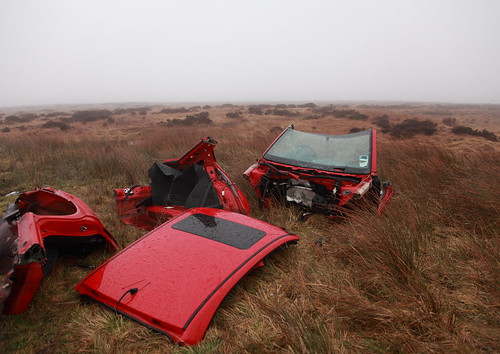
Too big to fail


P1010307


Have you been to Denver airport? It is one of the more modern airports in the US.  It handles vast numbers of travelers, with surges of visitors arriving for skiing weekends.  Many bring oversized ski gear, mountain bikes, various outdoors equipment.  The airport uses a manual system to handle the luggage. 

At the time Denver International Airport (DIA) was being built, there was a project to build a state-of-the-art automated luggage-handling system to improve speed and efficiency of the operations.  The luggage-handling system was being built by BAE Systems, an independent vendor who was originally hired for a smaller project.  When airport authorities sought bids for building the all-airport system, none of the submitted proposals promised to deliver this highly complex project within the offered timeframe.  So BAE was approached directly, and soon agreed to a fixed scope, schedule of under 2 years and fixed budget deal to deliver the all-airport baggage handling system.

As the project went on, it became apparent that the deal with BAE has been made in haste, many stakeholders in the system did not get a chance to provide their input.  Thus the project was pressured into accepting more changes later in the cycle.   Having started working on the system, BAE Systems ran into many technical problems both with system design and system constraints, while at the same time changes of directions were still being introduced.   In addition, death of Chief Engineer for the Denver International Airport and subsequent change of leadership complicated the project even further.

Throughout this ordeal, neither BAE Systems nor DIA team raised the question about terminating the project.  For nearly 3.5 years seasoned managers and engineers continued to press on (and spend taxpayers money) on a project that was late from the start, was handled by an inexperienced vendor, and was continuously pressured to agree to yet more last-minute changes, with no risk management or mitigation in place.

BAE Systems did not have the expertise in building systems of that magnitude, and was looking to gain experience on the Denver airport project so that it could pursue more big projects in the future.  While some people at BAE realized the risks and complexities, the management chose to press on because the stakes were so high.    DIA was shooting for a most modern, state-of-the-art airport facility, and deemed the project too big to fail. Both groups chose to ignore reality and expert advice in the pursuit of building the most complex system in the world.

DIA baggage-handling system of the 1990x is one of the more spectacular failures among IT projects to date.  Bad technical problems, poor planning, scheduling pressure, unexpected last-minute changes and complete lack of risk management all contributed to the situation.   The scary part is, all of these are present in most software projects.  High (or perceived high) stakes cause people to press on to the breaking point, demanding managers up the pressure, inexperienced technical people struggle with problems and plan poorly, over-confident customers insist on last-minute changes.   The successes still happen – often by a miracle of dumb luck, an amazing technical genius, blatant disregard to work-life balance, -- but not nearly as often as they could, and should.    

P1000098

Sunday, July 10, 2011

Style and substance


Ford Shelby Cobra GT500 Show Car


There are people who, when asked what car they would like to have, say "Red, with a sunroof and leather seats". A car is a powerful machine that exists to move people and/or things from one location to another, handle high speeds, protect its content from strong hits, and last a significant amount of time.   Leather seats are cool, but are not exactly high on my list of important characteristics of a car.

Leather seats are not unimportant.  They are one of the first things that a person notices about a car, and have a big impact on the driver's and passengers' experience.   However, car owner's experience is more than just driving and riding in that car: most car owners also have to survive an accident or a dozen while in the car, handle service and repairs for the car, and occasionally drive in adverse conditions where good handling becomes extremely important. 

If a car was a piece of software, the leather seats would be a feature.  Engine, handling and protection for the passengers provided by the strong body of the car would all be parts of the architecture.   Many people, when thinking about software, tend to consider its features, and nothing else.   When these people are product owners or project managers, the product features get a lot of thought and resources, while architecture evolves like a weed, with little care and hardly any testing.

Let me continue with the car analogy: an automobile can have the best-quality leather in the world on its seats and also be a complete lemon.  The wonderful seats won't make the car run, be safe or reliable. Same goes for software projects: great features do not guarantee usefulness, user satisfaction, or return on investment.  While features of an application make or break users' experience, the software, like a car, must also work, handle its load gracefully, and protect its owners and users from failures.   And that takes effort: time, resources, and careful thought about software architecture.


car

Sunday, June 5, 2011

Ideas on software usability: power of a nudge

Broccoli

A nudge is a suggestion, a small incentive, but it can have big consequences on the outcome.

Placing certain products at or just above eye level in the shop is a nudge to consider these (presumably, most profitable) items first. Placing broccoli early in the lunch line-up leads people to get it more often, improving nutrition.  Automatic enrollment in 401k is a strong nudge to save for retirement, since the money will go in automatically.  Enrollment in a gym isn't much of a nudge, but signing up for a group exercise class or sessions with a trainer may work as a nudge and encourage attendance.

The nudge can come from a policy, from a physical environment, or from software.  Mozilla Thunderbird is smart enough to nudge the user to actually attach a file if it finds the word "attachment" in the text. Amazon.com and many other online retailers learned to nudge customers to write reviews, and to rate reviews left by others. Word processors nudge users to correct the spelling and sentence syntax by visually marking unknown letter sequences.

However, there is plenty of software that is less helpful than it could be if it was to nudge the user to follow better practices.

  •  PowerPoint offers no nudges to produce good presentations - small font is as easy to reach as large, bullets go in indefinite layers with no suggestions to keep it simple. 
  •  Modern IDEs have a lot of great capabilities to help write readable code, but don't yet automatically generate nudges to rename and refactor. 
  •  Software like Infinitest nudges the developer to update unit tests regularly to keep them passing, but not to write new ones. 
  •  Neither Wordpress nor Blogger.com nudge to limit the size of the blog post, suggest pagination, and do not remind to include pictures (but not too many pictures).

Behavioral research shows that nudges work. Yet, in order to work and improve performance, nudges need to be carefully designed and created. Software design industry is currently in the early stages of learning how.

PowerPoint slide